5 SEO tips for Interior designers to boost their online presence

Learn How to Optimize Your Interior Design Website for SEO and Attract More Clients with These 5 Tips from a Top Interior Design Business Coach
In today’s digital age, having a beautifully designed website isn’t enough to grow your interior design business. One of the biggest mistakes that I see interior designers make is spending all their time on Instagram and social media, but ignoring their virtual storefront.
If you ever felt that social media’s pull on your time is exhausting and you can never take a break, your website can do a lot of the heavy lifting.
Your interior design website can help if
you have just started your interior design business
if your Instagram presence is not enough to convince clients
if they have questions about your services
if they want to set up a initial clarity call
However, how do you stand out?
You need a site that not only reflects your style and expertise but also attracts new clients. This is where Search Engine Optimization (SEO) comes into play. SEO ensures that your site ranks higher on search engines like Google, which means more visibility, more visitors, and ultimately, more clients.
As an experienced interior design business coach, I’ve seen firsthand how optimizing an interior design website can make a huge difference in attracting clients. With a few tweaks and strategic efforts, your online presence can flourish, putting your interior design business front and center for those seeking your services.
Let’s dive into five key tips for optimizing your interior design website for SEO.
1. Start with Keyword Research
One of the most important steps to improve your SEO is conducting keyword research. Keywords are the words and phrases people use to search for interior design services online. If your website content doesn’t include the right keywords, potential clients may never find you.
How to Do It:
• Identify your main services: Are you offering residential design, commercial design, or perhaps both? Get specific about the types of projects you excel in, like “contemporary kitchen design” or “luxury home interiors.”
• Use SEO tools: Tools like Google Keyword Planner, Ubersuggest, or Ahrefs can help you identify the best keywords for your niche. Look for long-tail keywords such as “affordable interior design in [your city]” or “modern minimalist living room ideas.”
• Check your competitors: Take a look at the websites of other successful interior designers in your area. Which keywords are they using? This can give you valuable insight into what works in your market.
Pro Tip: Don’t forget to include secondary keywords like “online presence,” “attract clients,” and of course, “SEO” in your blog content and service pages.
2. Optimize Your Website Content
Once you have a clear set of target keywords, it’s time to optimize your content. This doesn’t just mean stuffing your pages with keywords; it’s about creating high-quality, valuable content that answers your clients’ questions and aligns with their needs.
How to Do It:
• Create dedicated service pages: Instead of having a single generic “services” page, create specific pages for each service you offer. For example, have separate pages for “residential interior design,” “commercial design,” and “space planning.” Include your target keywords on each page.
• Write blog posts: Regularly updating your blog with useful, keyword-rich content is a great way to keep your site fresh and boost SEO. You could write about design trends, case studies, or client success stories. Not only does this boost your search ranking, but it also positions you as an expert in your field.
• Use internal linking: Link to other pages within your website wherever relevant. For example, if you’re writing a blog post about designing a modern living room, link to your “living room design services” page. Internal links help search engines understand the structure of your website and boost SEO.
Pro Tip: Make sure to include secondary keywords like “interior design website” and “SEO” in your content naturally. Aim for a balance between keyword optimization and readability.
3. Optimize Your Images
Interior design websites are often image-heavy, which is great for showcasing your work. However, large images can slow down your site, which negatively impacts your SEO and user experience. Optimizing your images is crucial for both search engines and potential clients.
How to Do It:
• Use descriptive filenames: Before uploading images, rename your image files to something descriptive and keyword-rich. For example, instead of “IMG1234.jpg,” use “modern-living-room-design-sydney.jpg.”
• Add alt text: Alt text (or alternative text) describes the image to search engines. It’s a great place to include your keywords while still providing an accurate description of the image. For example, “Contemporary living room designed by [Your Name] in Sydney, featuring minimalist furniture and neutral tones.”
• Compress images: Use tools like TinyPNG or ImageOptim to compress your images without sacrificing quality. This will help speed up your website’s load time.
Pro Tip: Slow-loading sites frustrate users and hurt your search rankings, so image optimization is key to maintaining a strong online presence.
4. Improve Your Website’s Mobile-Friendliness
With more people using smartphones to search for services, a mobile-friendly site is no longer optional—it’s a necessity. Google also prioritizes mobile-friendly websites, so ensuring your site is responsive can significantly improve your SEO and help you attract clients.
How to Do It:
• Use a responsive design: A responsive website automatically adjusts to fit the screen size of the user’s device, whether it’s a phone, tablet, or desktop. If your site isn’t already responsive, it’s worth investing in a redesign.
• Check load speeds: Use Google’s Mobile-Friendly Test tool or PageSpeed Insights to see how your site performs on mobile devices. If your pages take more than a few seconds to load, you could be losing potential clients.
• Simplify navigation: Mobile users need simple and intuitive navigation. Make sure your menus are easy to access, and your call-to-action buttons (like “Contact Me” or “View Portfolio”) are prominent and easy to click.
Pro Tip: Always check your interior design website on different devices to ensure it looks and functions perfectly across the board.
5. Leverage Local SEO
For interior designers, many clients come from local searches. Optimizing your website for local SEO ensures that people searching for design services in your area can find you.
How to Do It:
• Claim your Google My Business listing: Ensure all of your business information is correct and up-to-date, including your address, phone number, and hours of operation. Add photos of your work, and encourage happy clients to leave reviews.
• Include local keywords: Use local keywords throughout your website. For example, instead of just “interior designer,” use “interior designer in [your city].” Add your city or neighborhood name in strategic places like page titles, meta descriptions, and headings.
• Get listed in local directories: There are plenty of online directories specific to your area. Ensure your business is listed in reputable directories, such as Houzz, Yelp, or even local business listings.
Pro Tip: Local SEO helps you attract clients searching for services near them, increasing your chances of getting hired for local projects.
Conclusion
Optimizing your interior design website for SEO may seem overwhelming, but by implementing these five tips—keyword research, content optimization, image optimization, mobile-friendliness, and local SEO—you’ll improve your website’s ranking, increase your online presence, and attract more clients.
Whether you’re new to interior design or an established designer looking to grow your business, SEO is a powerful tool. It’s not just about building a visually appealing site; it’s about making sure potential clients can find you when they search for the services you offer.
So, take the time to fine-tune your website, and soon, you’ll see the rewards in the form of more traffic, more inquiries, and more clients.
New interior design websites launching soon!!!
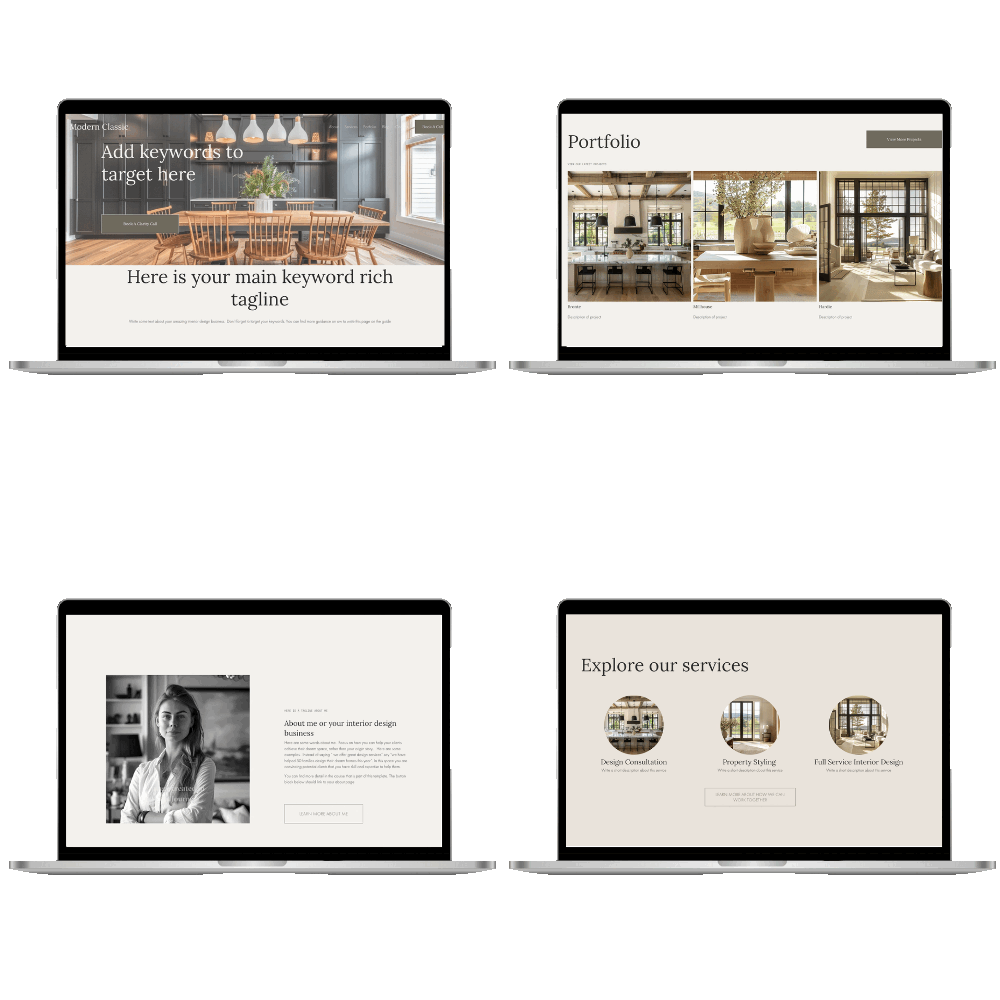
An example of an interior design website template that I will soon be launching
I will be launching interior design websites very soon! These templates have been carefully crafted to ensure that you can launch your website quickly and strategically- without any fuss. They will come fully loaded with a course that will support you and ensure that you get the very best performance on your website.

Hi 👋🏽 I’m Joanne!
I’m an interior designer, content creator, educator, and business coach. After studying Economics and Education at uni, the design world beckoned, drawing me to Christie’s in London, where I completed post-grad studies in art & design, and then to Hong Kong, where I founded Eclectic Cool, a design firm and design store. Eclectic Cool represented international brands such as Gubi, &tradition, HAY, Armadillo Rugs & Dinosaur Designs to name a few. My work and store have been featured in Monocle, Conde Nast Traveller, Elle Decor, Expat Living, Cathay Pacific inflight magazines, South China Morning Post, and the ABC (Australia) network and more. I live between on the south coast of Australia and Hong Kong with my husband and cavoodle. I’m the mum of three adult children.
Don’t forget to grab the free stuff! For Interior Designers!
Want a free investment guide you can use in your interior design business?
This 24-page investment guide, made in Canva, is yours to customize with your logo and branding. Fill out the form to download now!
You might like…